Often, in-room dining is synonymous with stale, ho-hum meals more endured than enjoyed. It’s time to shatter that stereotype once and for all. With a little creativity at every step in the process, you can make the entire experience more satisfying and delightful for guests who choose to dine in their rooms. While many factors contributed to making room service a “dining option of last resort” for hotel guests, it often came down to the inability of the food preparation equipment itself to deliver consistent quality, quickly and efficiently.
Those days are gone. With the sort of equipment innovations available today, it’s possible to turn that tired room service stereotype on its head and add star after star to the in-room dining experiences of your guests.
The best way to shatter stereotypes is to rethink every aspect of the in-room dining experience, including the amount of time it traditionally takes from order to delivery. While not an option for everyone, many hotels now provide online ordering capabilities. It’s a great way to shorten wait times and give guests a significantly more pleasant (and contemporary) experience than having to pick up a menu in one hand and the phone in the other to place an order.
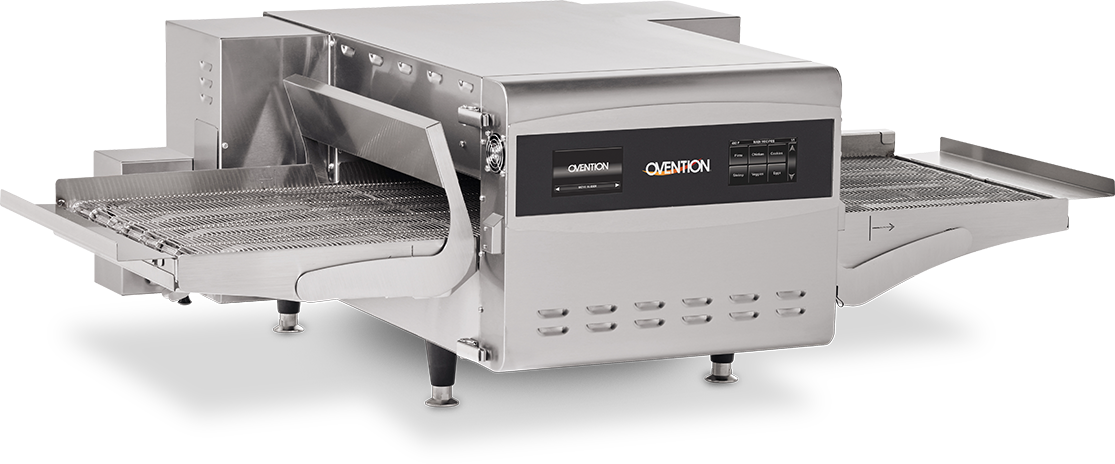
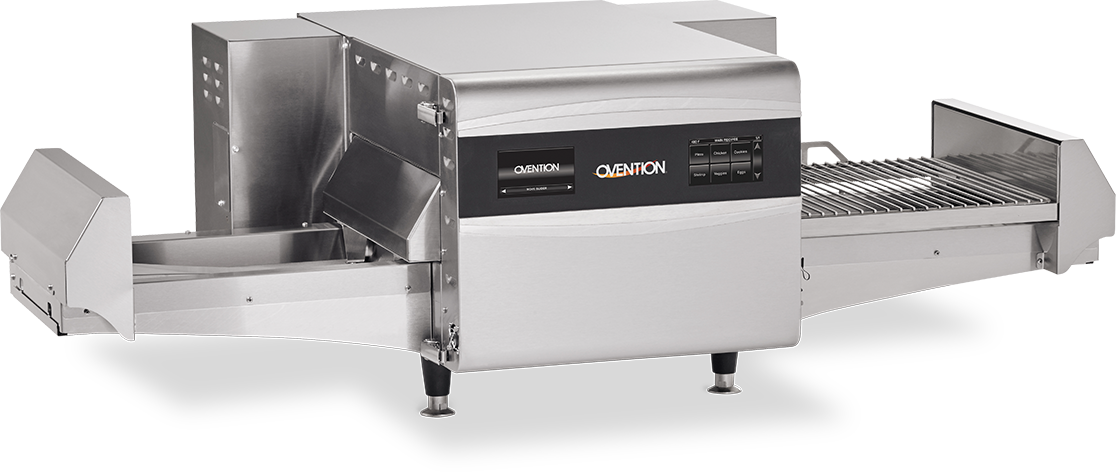
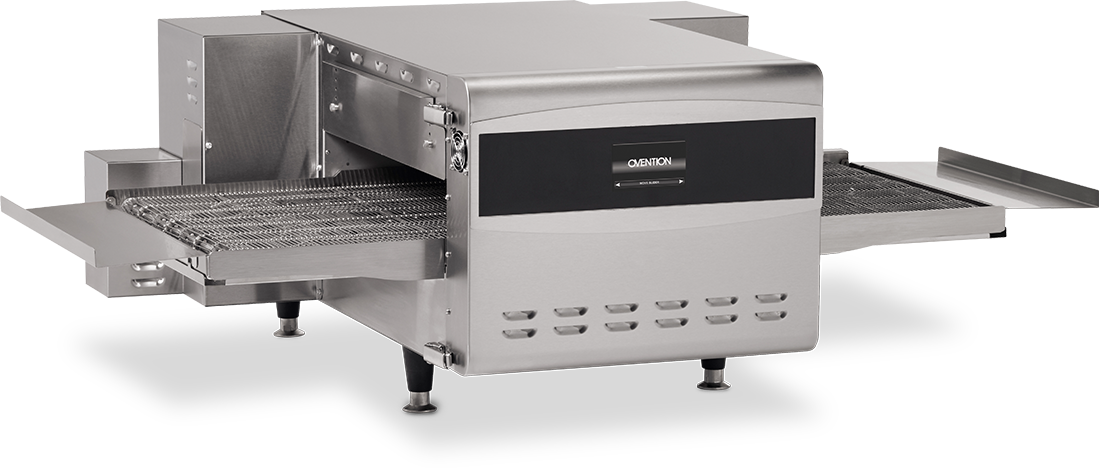
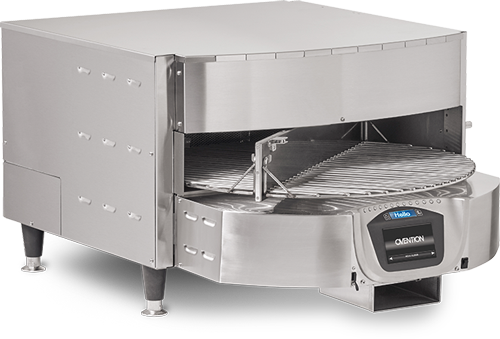
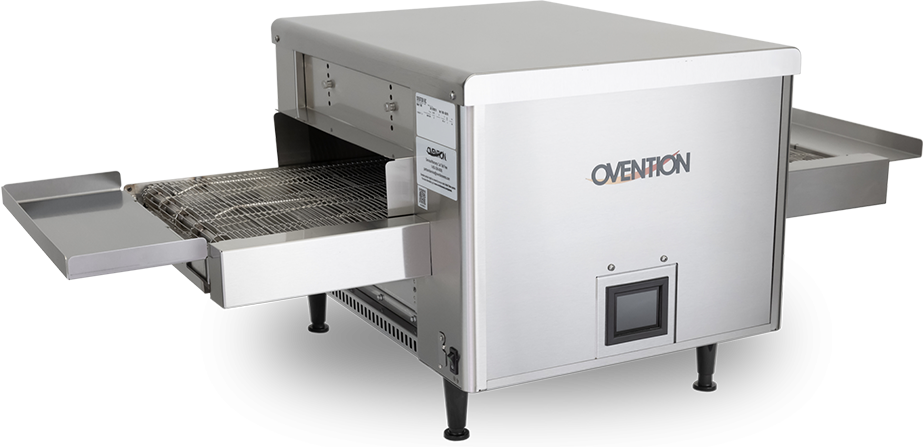
An easier-to-adopt way to shorten wait times is to make one hundred percent certain the food preparation equipment itself has the necessary capabilities to deliver fast, consistent quality every time. Not all equipment is created equal and it’s essential to find options you can count on. Does your current equipment have specific innovations that increase food preparation speeds without sacrificing quality?
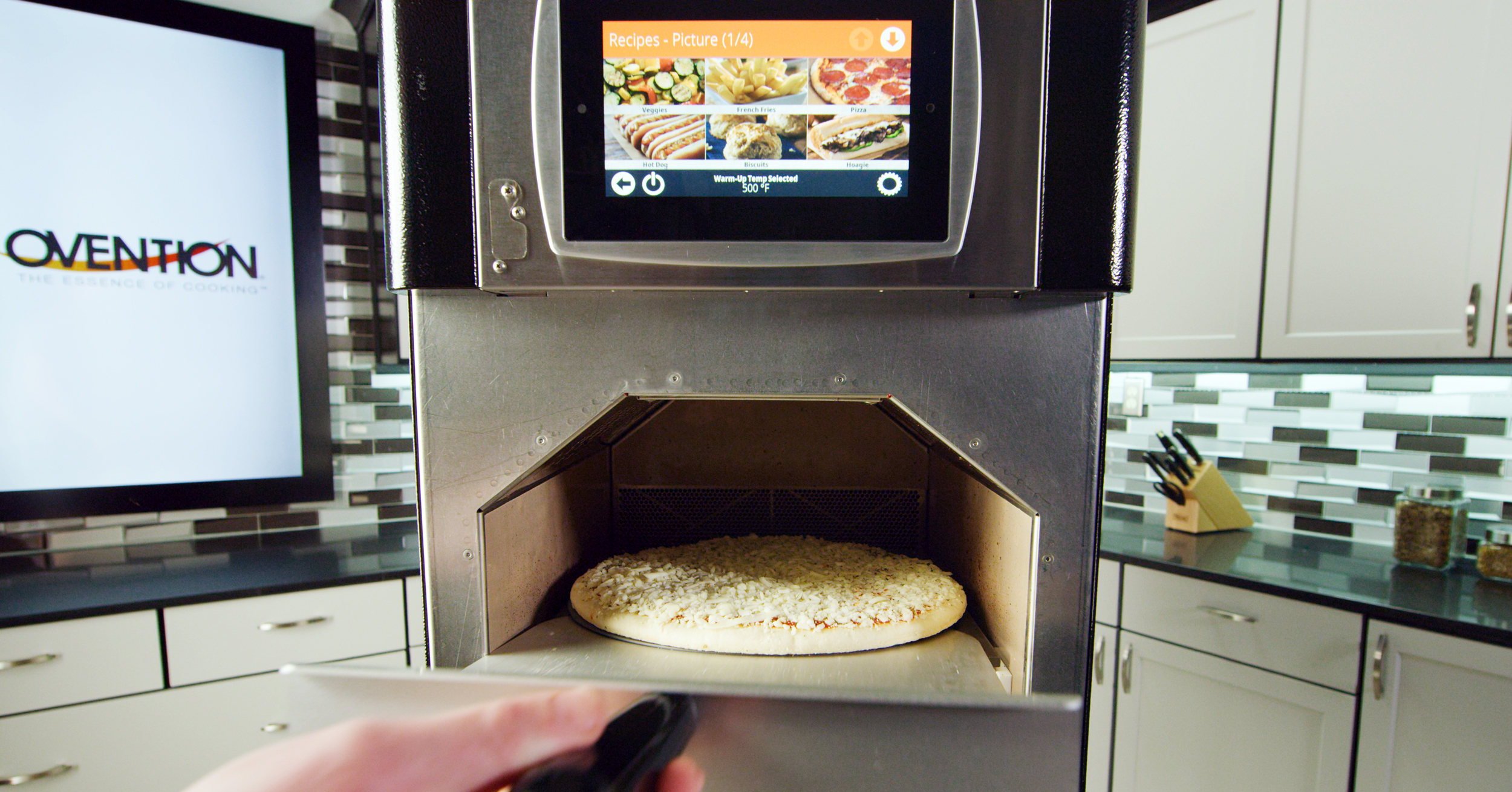
A significant number of in-room dining guests will always want burgers and other traditional comfort foods. But wouldn’t it be great to also offer trendier options that spice up a menu and delight guests looking for more than just the same-old-same-old? Imagine having the confidence and capabilities to serve anything from lobster rolls to popular ethnic dishes. That sound you hear is a stereotype getting shattered into a million pieces.
Again, the key to delivering both traditional fare and trendier options is choosing equipment that’s advanced enough to handle more than ordinary equipment could in the past. When you’re ready to get more creative (and attract more adventurous diners) with your menu offerings, make sure your equipment has what it takes to deliver everything you need it to deliver for you.
While it may be advantageous to surprise guests with unexpected new menu options, it’s just as important to eliminate all surprise when it comes to the integrity of the food being delivered. Perhaps the single best way to turn the room service stereotype on its head is by ensuring the food arrives with the consistent quality your guests are expecting.
These are the sort of innovations that can help you deliver in-room dining experiences that exceed the expectations of your guests. In-room dining doesn’t have to be an option of last resort for guests. With fresh thinking, it can shatter even the deepest-held stereotypes.
How CasinosMinimumDeposit Explains Low Deposit Thresholds in New Zealand
New Zealand’s online gambling market has undergone considerable structural change over the past decade, and one of the most visible shifts has been the normalization of low minimum deposit thresholds at offshore-licensed casinos. Where once a NZ$20 or NZ$30 deposit was considered the entry point for most platforms, players in New Zealand can now routinely find casinos accepting deposits as low as NZ$1, NZ$5, or NZ$10. This shift is not accidental, nor is it purely a marketing strategy. It reflects a convergence of regulatory realities, payment technology evolution, and a deliberate effort by operators to serve a broader demographic of players — including those who approach online gambling cautiously, with small recreational budgets. Understanding why these thresholds exist, how they are structured, and what they mean for the average New Zealand player requires looking at several layers of the industry simultaneously.
The Regulatory Context Shaping Deposit Minimums in New Zealand
New Zealand occupies an unusual position in global gambling regulation. The Gambling Act 2003 is the primary domestic legislation governing gambling activities, and it explicitly prohibits operators from offering online casino-style games to New Zealand residents unless they are operated by the New Zealand Lotteries Commission or TAB New Zealand. This means that the vast majority of online casinos available to New Zealand players are licensed in offshore jurisdictions — most commonly Malta (under the Malta Gaming Authority), Gibraltar, Curaçao, Kahnawake, and the Isle of Man.
Because these operators are not subject to direct New Zealand regulatory oversight, they have significant latitude in setting their own deposit minimums. The Gambling Act 2003 does not specify minimum or maximum deposit thresholds for offshore platforms, and there is no equivalent of the UK Gambling Commission’s affordability checks or deposit limit mandates that would force operators to set higher entry points. This regulatory vacuum, paradoxically, has allowed the market to move toward lower thresholds rather than higher ones, because operators competing for New Zealand customers have used accessible deposit minimums as a differentiating factor.
The Department of Internal Affairs (DIA) in New Zealand has historically focused its enforcement efforts on domestic operators rather than offshore platforms, and while there have been periodic discussions about updating the Gambling Act to address offshore online gambling more comprehensively, no major legislative reform has been enacted as of 2024. The result is a market where offshore operators set their own terms, and deposit minimums have trended downward as competition intensified throughout the 2010s and into the 2020s.
It is also worth noting that New Zealand’s Anti-Money Laundering and Countering Financing of Terrorism Act 2009 (AML/CFT Act) does impose certain obligations on financial institutions processing gambling-related transactions, but these obligations fall on banks and payment processors rather than the offshore casinos themselves. This means that while a New Zealand bank might flag or decline certain gambling transactions, the casinos themselves are not domestically required to impose minimum deposit floors for compliance purposes. Some operators set minimums partly to avoid the administrative overhead of processing very small transactions, but this is an operational decision rather than a regulatory mandate.
How Payment Infrastructure Determines What “Low” Actually Means
The practical floor for any deposit minimum is not set by regulation — it is set by payment processing economics. Every transaction carries a cost: interchange fees for card payments, processing fees for e-wallets, and network fees for cryptocurrency transfers. For a casino to accept a NZ$1 deposit and remain profitable on that transaction, the processing cost per transaction must be low enough that it does not consume the entire deposit amount before any gameplay occurs.
The expansion of e-wallet infrastructure has been the single most important factor enabling sub-NZ$10 deposit minimums in New Zealand. Services like Skrill, Neteller, and more recently, locally relevant options like POLi and various prepaid card solutions, have reduced per-transaction costs significantly compared to traditional credit or debit card processing. Skrill, for instance, charges merchants a percentage-based fee rather than a flat fee plus percentage, which makes very small transactions more economically viable for operators than they would be through Visa or Mastercard processing alone.
Cryptocurrency deposits have pushed this further. Bitcoin, Ethereum, and stablecoins like USDT allow near-zero processing costs at the casino end, which is why many crypto-accepting casinos set their minimum deposits at the equivalent of NZ$1 or even lower. The blockchain network fee (gas fee for Ethereum, or miner fee for Bitcoin) is borne by the player at the point of transfer, so the casino’s cost per transaction is minimal regardless of the deposit size. This has created a two-tier market where crypto-accepting casinos can sustain lower minimums than those relying exclusively on traditional payment rails.
Detailed breakdowns of how these payment method differences translate into actual deposit minimums across dozens of platforms are documented by resources like http://casinos-minimum-deposit.com, where the relationship between payment method and threshold is mapped across a wide range of operators serving the New Zealand market. Understanding that a NZ$5 minimum at one casino might only be available via Skrill, while the same casino requires NZ$20 for a bank transfer, helps players make informed decisions about which payment method to use rather than simply choosing a casino based on its advertised minimum.
Prepaid cards, particularly Paysafecard, have also played a role in the New Zealand low-deposit market. Paysafecard vouchers are available in denominations starting at NZ$10 in most retail outlets, and because they carry no bank account linkage, they are popular with players who prefer to keep gambling spending separate from their main finances. Several operators have specifically set their Paysafecard minimum at NZ$10 to align with the smallest available voucher denomination, making it a natural entry point for budget-conscious players.
What CasinosMinimumDeposit Reveals About Threshold Patterns Across Operators
Comparative analysis of deposit minimums across the New Zealand-facing online casino market reveals several consistent patterns that are not immediately obvious from looking at any single operator. CasinosMinimumDeposit has documented these patterns through systematic review of operator terms and conditions, and the picture that emerges challenges some common assumptions about how low-deposit casinos operate.
First, there is a meaningful distinction between the advertised minimum deposit and the minimum deposit that qualifies for a welcome bonus. An operator might accept a NZ$1 deposit in principle, but its welcome bonus may require a minimum deposit of NZ$20 or NZ$30 to trigger. This means that a player depositing NZ$5 at a “NZ$5 minimum deposit casino” will have their deposit accepted and can play, but will not receive the bonus that was prominently featured in the casino’s marketing. This distinction is important because many players choose a casino specifically for its bonus offer, and the effective minimum to access that bonus is often significantly higher than the headline deposit minimum.
Second, minimum deposits are frequently tiered by payment method in ways that are not always clearly disclosed on the casino’s main deposit page. A casino might list NZ$5 as its minimum deposit, but this may apply only to e-wallets. The same casino might require NZ$15 or NZ$20 for debit card deposits and NZ$50 or more for bank transfers. Players who rely on bank transfers — which remain a common payment method in New Zealand despite the growth of e-wallets — may find that their effective minimum is substantially higher than what the casino advertises.
Third, there is a geographic dimension to minimum deposit settings that is rarely discussed. Some operators serving New Zealand apply different minimums to NZD accounts compared to accounts denominated in USD, EUR, or AUD. Because NZD is a smaller currency in global terms, some payment processors charge higher per-transaction fees for NZD processing, which can push the minimum deposit threshold higher for New Zealand players than for players in the eurozone or the United States using the same platform. This is one reason why a casino that advertises a €1 minimum deposit in European markets might set its NZD minimum at NZ$5 or NZ$10 — the underlying economics of currency conversion and processing fees differ.
Fourth, the relationship between minimum deposit and withdrawal minimums is significant and frequently overlooked. Many casinos set their withdrawal minimum higher than their deposit minimum, sometimes substantially so. A casino with a NZ$5 deposit minimum might have a NZ$30 or NZ$50 withdrawal minimum. This means that a player who deposits NZ$5 and wins NZ$15 cannot withdraw their winnings until they either continue playing (and risk losing) or make additional deposits to reach the withdrawal threshold. For players using low deposit thresholds as a genuine budget management strategy, this asymmetry can undermine the financial control they were trying to exercise.
The Demographics and Behavioral Economics Behind Low-Deposit Casino Popularity
The demand for low minimum deposit casinos in New Zealand is not uniform across the player population. Research into gambling behavior in New Zealand, including surveys conducted by the Ministry of Health as part of its ongoing gambling harm monitoring program, consistently shows that a significant proportion of online casino players are recreational gamblers who allocate small, fixed amounts to gambling entertainment. The 2020/21 New Zealand Health Survey found that approximately 67% of New Zealand adults had gambled in the previous year, with online gambling participation growing steadily from around 4% of adults in 2012 to over 10% by the early 2020s.
Within this population, low minimum deposits serve a genuine functional purpose. For a player who has allocated NZ$20 per month to online casino entertainment, the ability to deposit NZ$5 at a time rather than NZ$20 provides more control over spending pace and allows them to spread their entertainment budget across multiple sessions. This is a rational financial behavior, not a sign of problem gambling — though it is worth noting that gambling harm researchers have raised questions about whether very low deposit thresholds might also lower the psychological barrier to entry for vulnerable players.
The behavioral economics of low deposit thresholds also intersect with the sunk cost fallacy and loss aversion in ways that operators understand well. A player who deposits NZ$5 and loses it quickly may be more likely to make a second NZ$5 deposit than a player who deposited NZ$20 and lost it, because the smaller loss feels less significant. This can result in total spending that exceeds what a single higher deposit would have produced. Operators are aware of this dynamic, and while it is not the stated rationale for low deposit minimums, it is part of the commercial logic that makes low-threshold casinos financially viable despite the lower average transaction size.
The student and young adult demographic in New Zealand has been particularly associated with low-deposit casino usage. University students and young professionals in their early twenties — a cohort with relatively lower disposable income but high digital literacy and comfort with online payment systems — represent a disproportionate share of the low-deposit casino player base. The availability of NZ$10 or NZ$20 deposit options aligns with the discretionary spending patterns of this demographic in a way that NZ$50 or NZ$100 minimums would not.
It is also relevant that New Zealand has a relatively high rate of smartphone penetration and mobile internet usage, with Statistics New Zealand data showing over 90% smartphone ownership among adults under 45. Mobile-first casino platforms have found that low deposit minimums reduce friction in the conversion funnel — a player who decides on impulse to try a casino on their phone is more likely to complete a deposit if the minimum is NZ$10 than if it is NZ$50. This impulse-driven acquisition pattern has shaped how mobile-optimized casinos structure their minimum deposit policies.
Understanding these demographic and behavioral patterns helps explain why the low-deposit casino segment in New Zealand has grown consistently rather than being a temporary promotional trend. The structural factors — regulatory environment, payment infrastructure, player demographics, and mobile usage patterns — all point toward continued demand for accessible deposit thresholds, even as broader debates about online gambling regulation in New Zealand continue to evolve. For players navigating this market, the key is not simply finding the lowest possible deposit threshold, but understanding the full structure of deposit and withdrawal terms, payment method limitations, and bonus eligibility conditions that determine whether a low-threshold casino actually serves their needs.
The conversation around minimum deposits in New Zealand’s online casino market is ultimately a conversation about accessibility, financial control, and market structure. Low deposit thresholds have expanded access to online casino entertainment for a broader range of New Zealand players, but they come with a set of conditions and nuances that require careful reading of operator terms. The gap between a casino’s advertised minimum and its effective minimum — once payment method restrictions, bonus thresholds, and withdrawal minimums are factored in — is often larger than players initially expect. Resources that systematically compare these conditions across operators, as CasinosMinimumDeposit does for the New Zealand market, provide a more complete picture than any single operator’s marketing materials can offer, and that kind of comparative transparency is increasingly valuable as the number of offshore casinos targeting New Zealand players continues to grow.
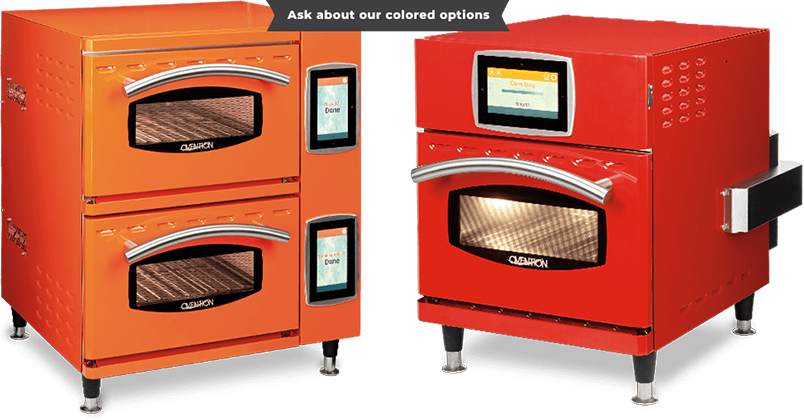
Ready to change how your guests view in-room dining? Want to learn more about how Ovention Double MiLO® ovens can help? Check us out today!