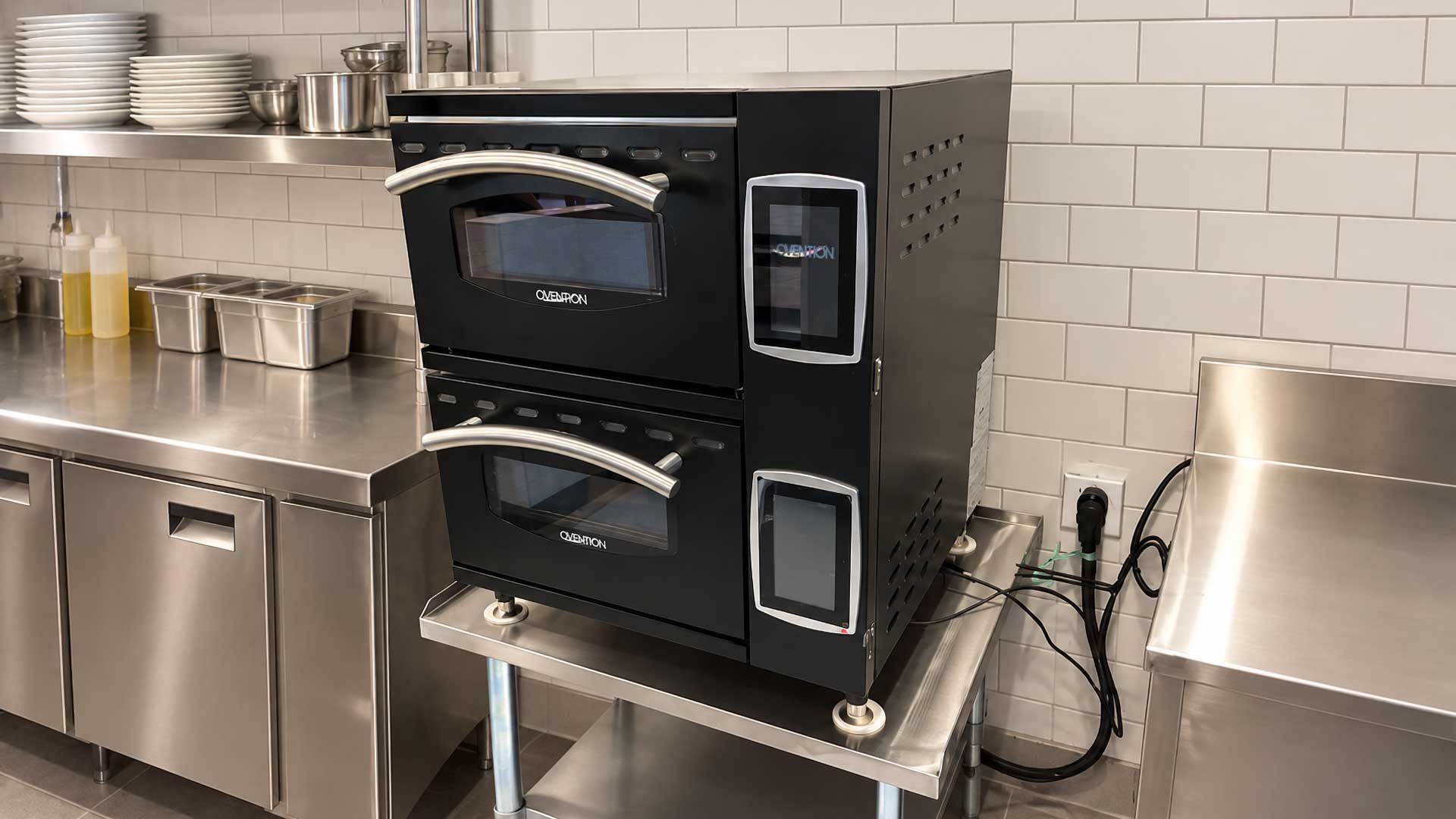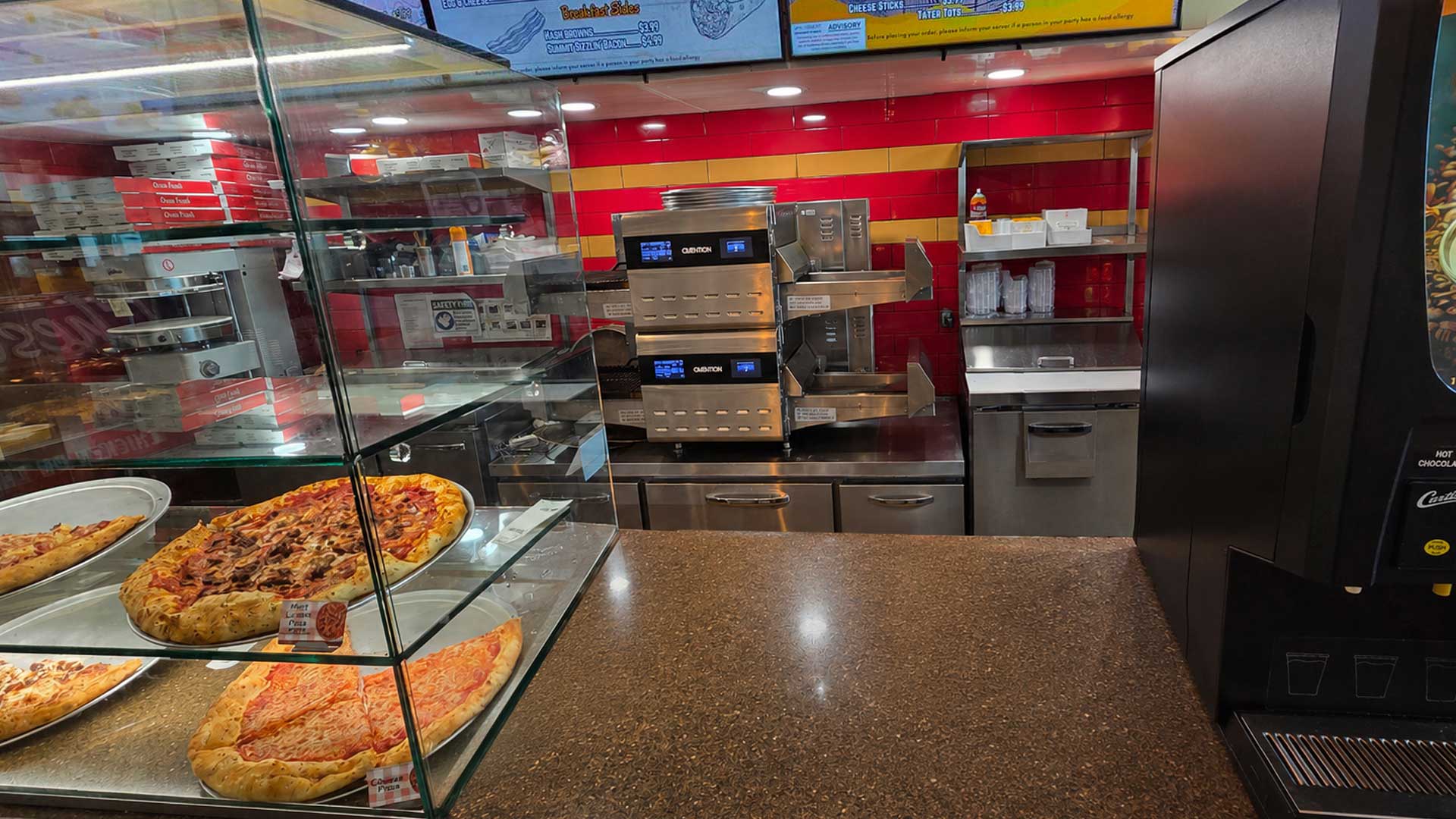

Finishing Strong with the Ovention F1400

Finishing touches shape how food is experienced. The final melt, the right level of toast, or a carefully controlled warmup can be the difference between food that’s simply hot versus truly crave-worthy.

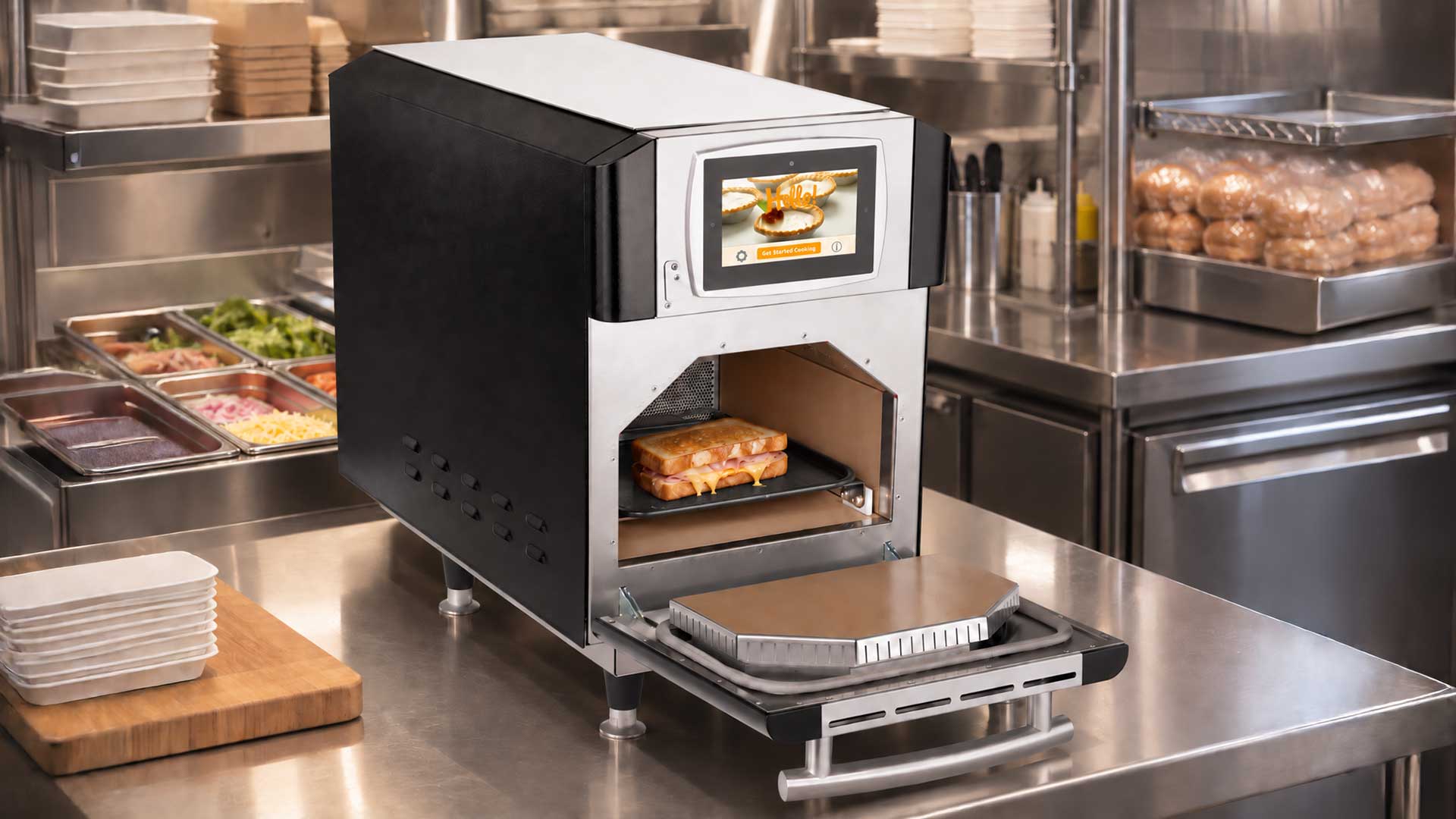
Designed for finishing and re-thermalizing, the Ovention Finishing 1400 focuses on the final stage of food preparation. It ensures dishes are finished with the texture, temperature, and appearance intended, whether they’re served to waiting guests or prepared for fast pickup by customers on the go.

Here’s how the F1400 earns its place at the finish.

1. The Melt Is the Moment

Great melts are all about timing. You want cheese that softens evenly without scorching and toppings that warm through without drying out. The F1400 handles that finesse with ease. It can melt cheese in as little as twenty seconds, which keeps dishes moving and textures right where you want them.

That kind of control pays off on menu items where the melt is the star. Loaded fries, potato skins, nachos, and other quick-fire, cheesy favorites come out finished cleanly and consistently, in all their ooey-gooey glory.

2. You’re Golden

Toasting is one of those steps where mistakes can show up fast. Buns come out uneven, bread dries out, or that unmistakable burnt smell permeates the kitchen (and hopefully doesn’t reach the dining room). The F1400 takes variability out of the equation, giving teams a perfectly repeatable toast they can rely on.

The linear conveyor and 14.6-inch belt width handle a wide range of breads and baked items without crowding, which helps everything move through evenly. From bagels to hoagies and hamburger buns to flatbreads, the F1400 delivers even toasting for bread items used every day on the line.

With belt speeds adjustable from ten seconds to three minutes, operators can dial in anything from a quick warm to a deeper toast and keep it locked in through service, even as volume changes. Once you have the right toast dialed in, the F1400 makes it easy to repeat consistently throughout service.

3. Bring It Back to Life

Reheated foods can lose their appeal fast when heat is uneven. The F1400 brings them back to life while preserving texture and flavor, so items don’t come out soggy, dried out, or overworked. It excels at re-thermalizing precooked, refrigerated items like pizza, fries, and appetizers, helping operators reset food quickly and consistently, keeping items service-ready as demand shifts throughout the day.

4. Fit to Your Flow

How FastpayoutCasinos Explains Withdrawal Speed Standards in Australian Online Gambling

Withdrawal speed has become one of the most scrutinized aspects of online casino operation in Australia, and for good reason. Australian players deposited and wagered billions of dollars through licensed and unlicensed platforms throughout the early 2020s, yet complaints about delayed payouts consistently ranked among the most common grievances submitted to consumer advocacy groups and gambling regulators alike. The gap between what operators advertise and what players actually experience at the cashier has prompted a growing number of independent information resources to systematically document, measure, and explain how withdrawal timelines actually work across different payment methods, licensing jurisdictions, and casino software environments. Understanding those mechanics is not simply a matter of consumer curiosity — it reflects a broader shift in how Australian gamblers evaluate platform quality before committing their funds.

The Regulatory Framework Governing Payout Timelines in Australia

Australia’s online gambling landscape is governed primarily by the Interactive Gambling Act 2001, which was significantly amended in 2017 to tighten restrictions on unlicensed offshore operators offering real-money casino games to Australian residents. Under the amended legislation, the Australian Communications and Media Authority (ACMA) gained expanded powers to issue blocking notices against non-compliant offshore sites and to pursue civil penalties. However, the IGA and its amendments focus primarily on the legality of offering services rather than on the operational standards those services must meet once a player has an account and funds on deposit. This creates a structural gap: Australian law does not prescribe specific maximum withdrawal processing times for online casinos in the way that, for example, the United Kingdom Gambling Commission does under its licence conditions and codes of practice.

The UKGC’s rules require licensees to process withdrawal requests promptly and without unreasonable delay, and the regulator has issued formal guidance specifying that delays beyond five business days require documented justification. No equivalent federal standard exists in Australia for online casino withdrawals. State-based regulators, including the Northern Territory Racing Commission (NTRC), which licenses several online wagering operators, and the Australian Capital Territory Gambling and Racing Commission, each apply their own conditions, but these primarily cover wagering products — sports betting and racing — rather than casino-style games. The practical consequence is that Australian players using offshore casinos licensed in Malta, Gibraltar, Curaçao, or the Isle of Man are subject to the withdrawal standards of those jurisdictions, which vary considerably in their specificity and enforcement rigor.

Malta Gaming Authority licensees, for instance, operate under Player Protection Directive requirements that include obligations around timely payment, and the MGA has issued fines exceeding €200,000 against individual operators for systematic payout delays. Curaçao-licensed operators, by contrast, operate under a master licence framework that has historically provided weaker player protection infrastructure, though Curaçao’s 2023 gaming ordinance reforms introduced stricter operator obligations including financial reserve requirements intended to ensure withdrawal capacity. For Australian players, the licensing jurisdiction of their chosen casino matters enormously, even if the platform’s marketing materials do not emphasize this distinction.

How FastpayoutCasinos Measures and Categorizes Withdrawal Performance

Independent review platforms focused on the Australian market have developed increasingly structured methodologies for assessing withdrawal speed, moving beyond anecdotal reporting toward systematic testing. FastpayoutCasinos represents one example of this approach, applying a documented framework that distinguishes between several stages of the withdrawal process that operators frequently conflate in their marketing: the pending period during which the casino itself holds and reviews a withdrawal request before forwarding it to a payment processor, the processing time imposed by the payment method itself, and the total elapsed time from player request to funds availability in the player’s account or wallet.

This three-stage distinction matters because operators often advertise “instant withdrawals” or “same-day payouts” while applying a 24-to-72-hour internal pending period that effectively nullifies the speed advantage of a fast payment method. A casino advertising instant crypto withdrawals, for example, may still impose a 48-hour manual review period for all withdrawal requests above a certain threshold, meaning the blockchain confirmation time of a few minutes is irrelevant to the player’s actual waiting experience. By separating these components, resources like https://fastpayout-casinos.com provide a more accurate picture of what players should realistically expect at different platforms and under different circumstances.

The categorization of payment methods by inherent processing speed is also more nuanced than most players realize. E-wallets such as PayPal, Skrill, and Neteller are generally processed within 24 hours once the casino releases the funds, but their availability to Australian players varies by operator policy — PayPal in particular is not universally accepted at offshore casinos serving the Australian market. Visa and Mastercard bank card withdrawals typically require three to five business days for funds to clear, reflecting interbank processing timelines rather than casino delays. Bank transfers can extend to seven business days depending on the receiving institution. Cryptocurrency withdrawals, when offered without extended pending periods, can complete within minutes for networks like Litecoin or TRON, while Bitcoin withdrawals may take 30 to 60 minutes depending on network congestion and the number of confirmations the casino requires before crediting funds.

FastpayoutCasinos applies verification testing at the account level, meaning reviewers complete the know-your-customer identity verification process that all licensed operators require before processing withdrawals. This is significant because KYC completion status is one of the most common sources of withdrawal delay that players misattribute to operator bad faith. An unverified account at virtually any licensed casino will have withdrawals held until documents are reviewed and approved, a process that can take 24 to 72 hours even at efficient operators. Players who have not completed KYC before initiating their first withdrawal frequently interpret this delay as a payout problem when it is actually a compliance requirement that applies universally.

Payment Method Infrastructure and Its Impact on Australian Withdrawal Experiences

Australia’s banking sector has specific characteristics that influence online gambling withdrawal experiences in ways that differ from European or North American markets. The New Payments Platform (NPP), launched in February 2018 by a consortium of Australian financial institutions, introduced PayID and Osko functionality that enables near-real-time bank transfers between participating institutions, 24 hours a day, seven days a week. This infrastructure theoretically enables casino operators to complete bank transfer withdrawals to Australian players within seconds rather than days — but adoption among offshore gambling operators has been slow, partly because the NPP requires Australian banking relationships that most offshore operators do not maintain directly.

The more common experience for Australian players using bank transfers involves SWIFT or correspondent banking networks, which reintroduce multi-day processing timelines regardless of the NPP’s domestic capabilities. Some operators route Australian dollar withdrawals through intermediary banks in Singapore or Hong Kong, adding additional processing steps and potential currency conversion delays. Players who receive funds in Australian dollars from an offshore operator may find that the transfer arrives in a foreign currency that their bank then converts, with the conversion rate applied at the time of settlement rather than the time of request.

The practical dominance of e-wallets among Australian online casino players reflects a rational response to these banking infrastructure constraints. Skrill and Neteller, both operated by Paysafe Group, maintain Australian dollar account functionality and are widely accepted at Malta-licensed and Isle of Man-licensed casinos. Transactions between a casino’s e-wallet account and a player’s e-wallet account occur within the same payment network, bypassing interbank clearing entirely, which is why e-wallet withdrawals process faster than bank transfers even when the underlying funds originated from a bank account. The limitation is that Australian players cannot use e-wallets to fund a casino account via credit card — a restriction that predates Australia’s broader credit card gambling ban, which took effect in January 2023 under ACMA enforcement guidance.

Australia’s credit card gambling ban, formalized through the Interactive Gambling Amendment (Credit and Other Measures) Act, prohibits Australian-licensed operators from accepting credit card payments for gambling. While this primarily affects deposits, it has indirect consequences for withdrawals: players who previously cycled funds through credit card accounts as a form of short-term credit no longer have this option, and the shift toward debit cards, bank transfers, and e-wallets as primary deposit methods has changed the withdrawal method landscape proportionally. Cryptocurrency adoption among Australian casino players has also accelerated since 2021, partly as a response to banking friction and partly reflecting broader retail cryptocurrency uptake in Australia, where the Australian Taxation Office has treated cryptocurrency as a capital gains tax asset since 2014.

Industry Standards, Operator Accountability, and What Withdrawal Speed Actually Signals

Withdrawal speed functions as a proxy indicator for several underlying qualities of a casino operation that are harder for players to assess directly. An operator that consistently processes withdrawals within 24 hours is demonstrating, among other things, that it maintains adequate liquidity reserves, that its compliance and fraud review processes are efficient, that its payment processing relationships are stable, and that it does not rely on withdrawal friction as a mechanism for encouraging players to reverse their cashouts and continue gambling. This last point deserves emphasis: some operators in the pre-regulation era deliberately designed withdrawal interfaces to maximize the likelihood that players would cancel pending withdrawals, a practice sometimes called “reverse withdrawal” or “cancel and continue.” Responsible gambling advocates and regulators in multiple jurisdictions have identified this as a harmful design pattern, and MGA licensees are now explicitly prohibited from making it easy for players to cancel pending withdrawals in ways that could exploit impulsive behavior.

The relationship between withdrawal speed and operator financial health is not merely theoretical. Several high-profile casino collapses in the 2010s and early 2020s were preceded by deteriorating withdrawal performance — operators began delaying payouts weeks or months before formally ceasing operations, as liquidity problems manifested first in the cashier before becoming publicly visible. Players who track withdrawal timelines at their chosen platforms and notice systematic lengthening of processing times without explanation have historically had reason to treat this as an early warning signal. This is one reason why independent tracking of withdrawal performance across a sample of operators, rather than relying solely on the operator’s own stated timelines, provides genuinely useful information to players managing risk.

Operator-stated withdrawal timelines in terms and conditions also warrant careful reading. The standard formulation — “withdrawals processed within 1-5 business days” — contains several variables that the operator controls unilaterally. “Business days” typically excludes weekends and public holidays, which in Australia include a substantial number of state-specific public holidays in addition to national ones. The “processing” reference point may be defined as the moment the operator forwards the request to its payment processor, not the moment funds arrive in the player’s account. And the range itself — “1-5 days” — gives the operator four days of flexibility without any obligation to explain why a particular withdrawal required five days rather than one.

More informative than the stated timeline is the operator’s actual track record, which is why independent testing and player-reported data collected by resources focused specifically on withdrawal performance provide a more reliable basis for comparison. The methodology matters: a single withdrawal test conducted by a reviewer provides limited data, while aggregated player reports across multiple withdrawal amounts, payment methods, and time periods produce a more robust picture of typical performance. Seasonal variation is also real — some operators experience slower withdrawal processing during peak periods such as major sporting events or holiday seasons when transaction volumes increase and compliance teams may be understaffed.

The emergence of dedicated withdrawal speed analysis as a distinct category of casino review content reflects a maturation of the Australian online gambling information ecosystem. Earlier review formats focused primarily on game selection, bonus structures, and software providers — factors that remain relevant but that tell players relatively little about the operational reliability of a platform. As Australian players have become more experienced and more willing to move between platforms based on cashier performance, the demand for granular, methodologically sound withdrawal data has grown correspondingly. Regulators in multiple jurisdictions have also begun citing independent review data in their own assessments of operator compliance, suggesting that the information produced by rigorous independent testing carries weight beyond its immediate audience of individual players.

Understanding withdrawal speed standards in Australian online gambling ultimately requires engaging with several layers of complexity simultaneously: the regulatory environment that shapes what operators are legally required to do, the payment infrastructure that determines what is technically possible, the operational choices that individual operators make within those constraints, and the independent verification mechanisms that allow players to distinguish marketing claims from documented performance. The gap between what operators promise and what they deliver at the cashier remains one of the most consequential information asymmetries in the online gambling market, and the systematic effort to close that gap — through consistent testing, transparent methodology, and publicly accessible data — represents a meaningful contribution to player protection in a sector where regulatory coverage remains incomplete.

Every kitchen has a rhythm. The F1400 fits into yours. The conveyor feed can run from the left or the right, switchable through the touchscreen. That small detail makes a big difference in tight prep lines, café stations, or quick-service setups where space is at a premium.

With a compact footprint and ventless operation for precooked items, the F1400 is easy to place where finishing actually happens, instead of being limited by ventilation requirements. It aligns with the flow you already have, which means fewer workarounds and smoother handoffs between team members.

5. Lock It In

Great finishing only works when it’s repeatable. Once the right settings are dialed in, teams need those same reliable results every time, without slowing down or second-guessing adjustments mid-shift.

The F1400’s front-facing touchscreen lets operators program and store up to four frequently used menu-specific settings. Conveyor speed and heat can be set once, then recalled with a single touch, keeping finishes the same from the first order through the rush. Repeatability is grounded in precise heat delivery, a core principle behind Ovention’s impingement technology. That makes it easier to maintain the right toast, melt, or reheat setting, even as volume and staffing change.

Instead of tweaking knobs or watching every pass, teams can focus on execution and flow, knowing the oven is doing its part. That means fewer variables to manage at the finish and more consistent food leaving the kitchen or prep area.

Winning at the Finish Line

Finishing steps often decide how food is experienced, whether it’s served immediately or prepared ahead for fast pickup. The Ovention Finishing 1400 gives operators confidence in those final moments, delivering consistent melts, clean toasts, and reliable reheating without guesswork.

By focusing on precision at the end of preparation, the F1400 helps ensure food is finished with the texture, temperature, and appearance intended. The result is food that consistently lands the way it’s meant to: hot, precisely finished, and completely craveable.
Ovention Ovens Make It Easy
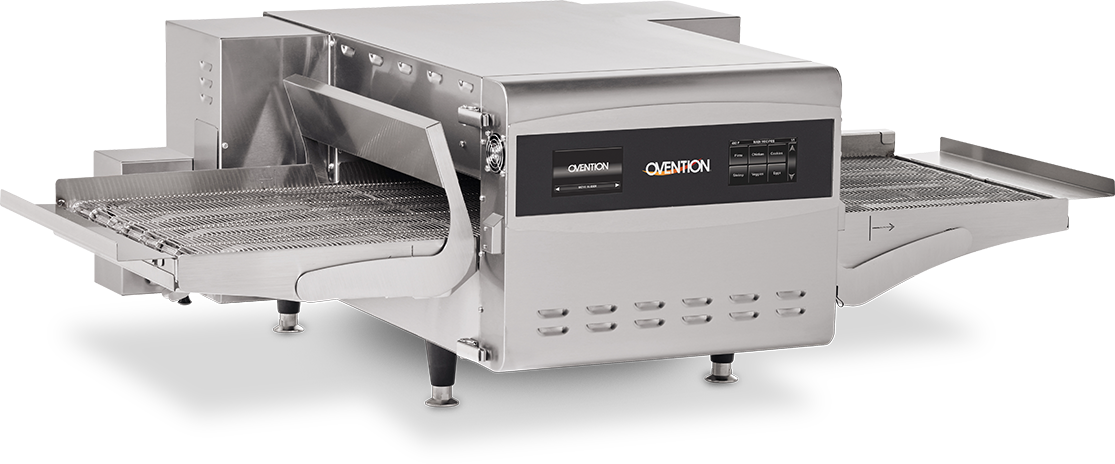
Shuttle® 2600/2000/1600/1200

If you value precision and volume, Ovention has the perfect oven to fit your operation. The Shuttle sets the new standard for conveyor ovens everywhere. No other oven can operate as both a conveyor and a closed-cavity oven.
Matchbox® 1718/1313
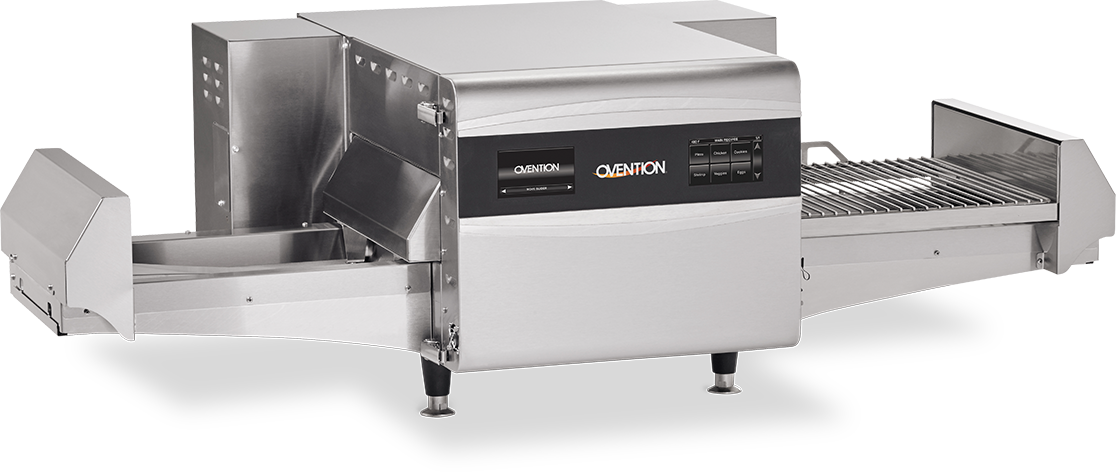
Matchbox® 1718/1313

Cook a full menu of delicious offerings without an oven hood. The Ovention Matchbox 1718/1313 takes the traditional conveyor oven to a whole new level.
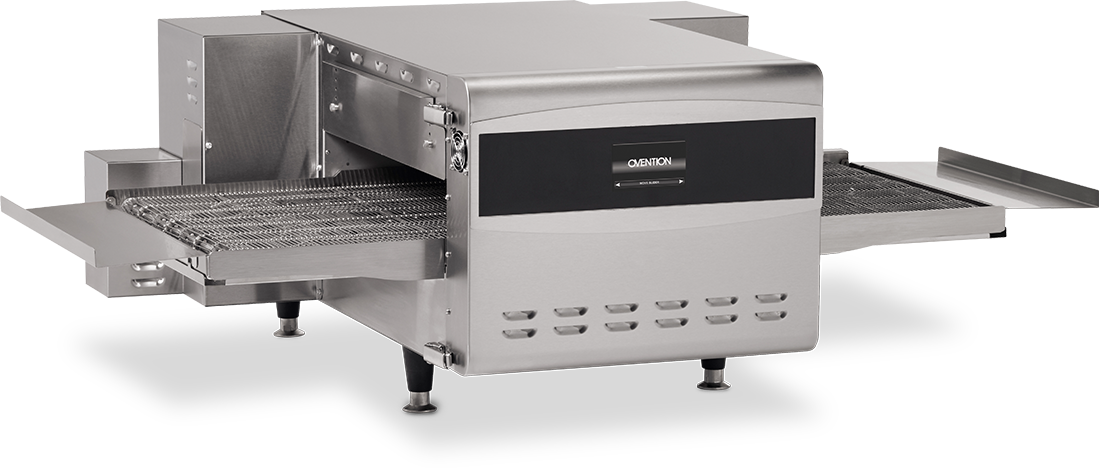
Conveyor 2600/2000/ NEW 1600! /1400

Simple, smart and the right fit for operators looking for a high-throughput conveyor oven. The Ovention Conveyor Oven is the most technologically elegant and operator-friendly conveyor on the market today.
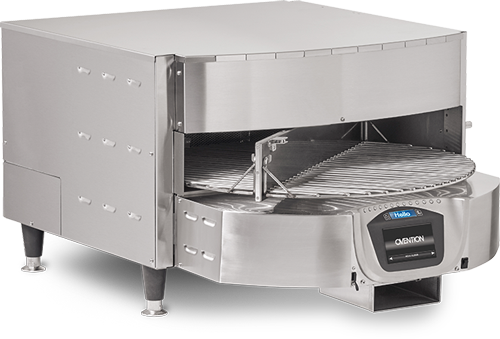
Matchbox® M360 14/12

Cook a full menu better, faster, and easier. The Ovention Matchbox M360 has Precision Impingement® technology, a unique cooking carousel, and a small footprint, making it the perfect fit for any operation.
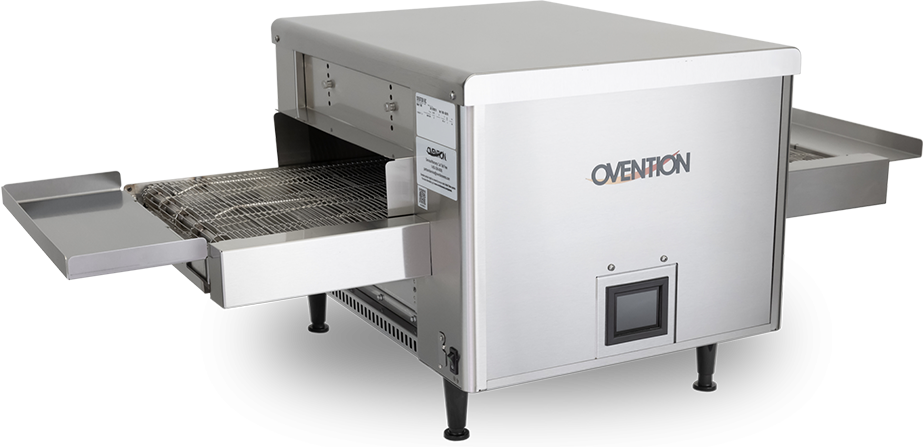
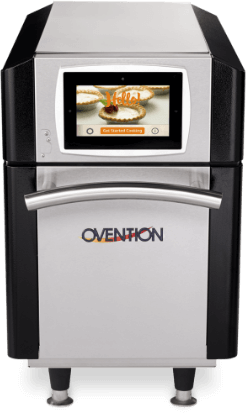
Finishing F1400
Finishing F1400

Finish your plates with ease and precision with this robust IR finishing conveyor. Melt, sear, toast, and finish to perfection with this operator-friendly, quiet conveyor.
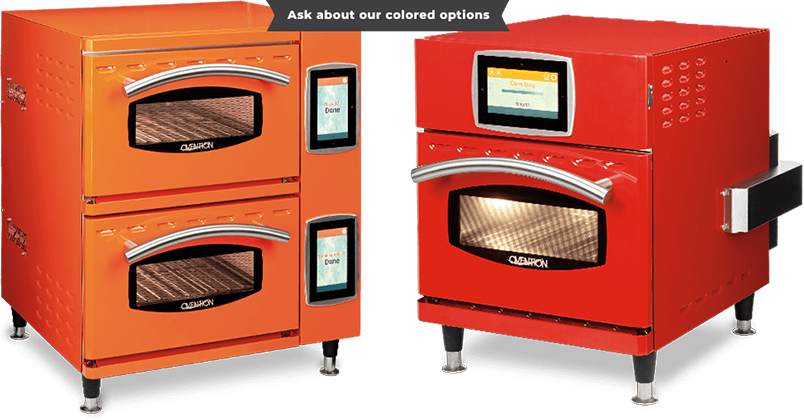
MiLO® Double/Single
MiLO® Double/Single

Revolutionary infusion of Linear Impingement and Infrared (IR) technologies. Independently controlled top and bottom cavities, each with its own interior light and control panel.
MiSA®‑a12
MiSA®‑a12

Introducing MiSA; Microwave Speed Assist. Higher quality, higher speed, smaller footprint.
Related
4 Things Your Oven Wishes You Knew
Jun 24, 2026

Your oven works hard. Day after day, it helps your team turn ingredients into menu items, keep service moving, and […]

Bringing Teams Up to Speed with High-Speed Ovens
May 29, 2026

A high-speed oven can transform kitchen performance. Faster cook times, repeatable results, and programmable precision all create opportunities to improve […]

What “Plug-and-Play” Really Means for Commercial Ovens
May 29, 2026

“Plug-and-play” sounds like a dream. Roll the oven in, plug it in, and you’re off to the races. In reality, […]

Schedule an Ovention Ovens Demo

Our goal is to partner with you to help you build your business. We will set up a demonstration that suits your needs, whether you want us to cook your current product, show you a range of new products, or do a side-by-side comparison with another oven we are ready to show you what Ovention can do.

Please complete ALL the fields below to schedule a demo.*

Find a Rep Near You

Experience an Ovention oven in action. We have test kitchens all across the country and representatives waiting to demonstrate our award-winning technology and ease of use. Contact us today to learn how one of our ovens can elevate your culinary versatility and build your business.

Cooked with Conveyor 2600/2000

0
    Your Cart
    Your cart is emptyReturn to Shop